
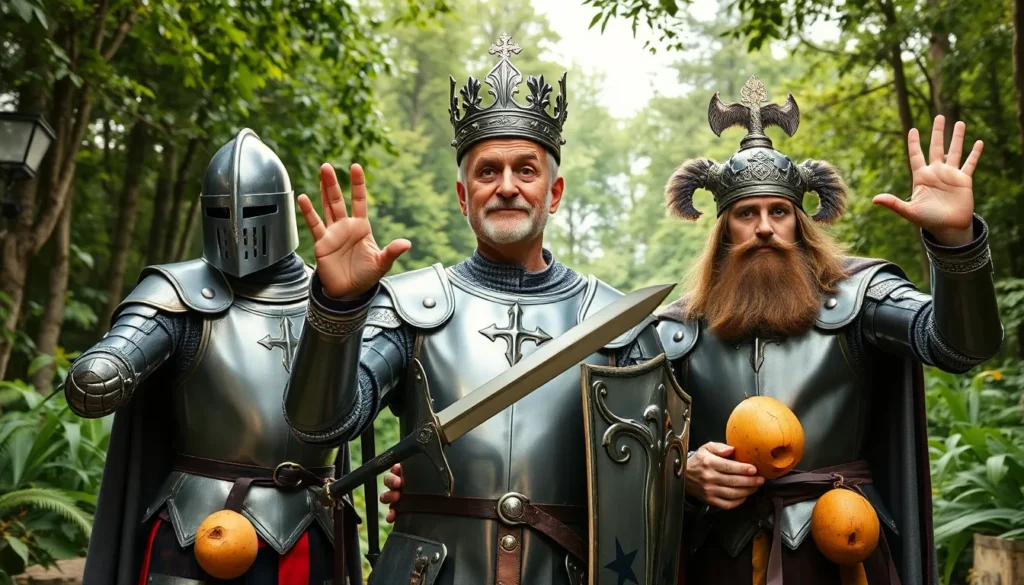
In a world where knights are brave and coconuts are a mode of transportation, “Monty Python and the Holy Grail” reigns supreme as a comedic masterpiece. This cult classic takes viewers on a hilariously absurd quest for the Holy Grail, blending sharp wit with unforgettable characters. From the Knights Who Say Ni to the infamous killer rabbit, every scene is a treasure trove of quotable moments that have stood the test of time.
But it’s not just a film; it’s a cultural phenomenon that has inspired generations of comedians and filmmakers. With its unique blend of satire and slapstick humor, it challenges the conventions of traditional storytelling. So grab your wooden sword and prepare for a journey filled with laughter, as we dive into the enchanting chaos of Monty Python’s irreverent take on Arthurian legend.
Overview of Monty Python and The Holy Grail
“Monty Python and the Holy Grail” debuted in 1975, presenting a unique twist on Arthurian legend. It showcases the comedic genius of the Monty Python troupe, creating a film that blends satire and absurd humor. Characters like King Arthur, Sir Lancelot, and the Black Knight contribute to the film’s lasting charm. Each character exhibits distinct personality traits, adding to the comedic chaos.
This film’s narrative structure deviates from traditional storytelling, opting for a series of sketches linked by the quest for the Holy Grail. Iconic scenes, such as the Knights Who Say Ni and the infamous coconuts, engage audiences with their irreverence. Dialogue throughout the film features clever wordplay and memorable catchphrases, solidifying its status in popular culture.
Notably, the film has garnered a dedicated fanbase over decades, inspiring numerous adaptations and stage productions. Its influence extends to contemporary comedy, where many comedians cite it as a significant inspiration. Critics praise the film for its innovative approach to filmmaking, often highlighting its ability to blend various comedic styles.
Budgeting at approximately $400,000, the film became a financial success, earning around $5 million worldwide. This impressive return on investment underscores its appeal across diverse audiences. Monty Python and the Holy Grail remains a cornerstone of British comedy, celebrated for its innovative humor and cultural impact.
Plot Summary

“Monty Python and the Holy Grail” offers a comedic reimagining of the legendary quest for the Holy Grail. The narrative unfolds through a series of interconnected sketches featuring outrageous humor and satirical twists.
Key Characters
King Arthur leads the band of knights, embodying a mix of nobility and absurdity. Sir Lancelot showcases bravery, albeit with moments of hilarity. The Black Knight, known for his over-the-top bravado, delivers memorable lines despite his comical misfortune. Other characters, such as the wise yet eccentric King of Swamp Castle and the enigmatic Knights Who Say Ni, add layers to the plot. Each character’s unique traits contribute to the film’s engaging and unpredictable storyline.
Major Themes
Absurdity remains a central theme throughout the film, presenting situations that challenge traditional narratives. The critique of medieval romance and chivalry emerges, highlighting the ridiculous aspects of these ideals. Identity and purpose are explored through Arthur’s interactions with his knights as they confront their motivations. Additionally, the film examines the nature of authority, often mocking the ineffectiveness of leaders. Such themes resonate with audiences, reinforcing the film’s lasting impact on comedy and culture.
Cinematic Techniques
Cinematic techniques in “Monty Python and the Holy Grail” significantly enhance its comedic impact. The film’s direction, marked by Terry Gilliam and Terry Jones, employs absurdity to subvert traditional narratives.
Directorial Style
Terry Gilliam’s unique visual approach creates surreal, enchanting sequences. Terry Jones emphasizes character-driven comedy, developing scenes that rely on sharp dialogue and timing. Each scene captures the unpredictable nature of the storyline, allowing humor to emerge organically. Moments like the Knights Who Say Ni highlight the blend of fantasy and absurdity that echoes throughout the film. Their directorial choices establish a rhythm that maintains audience engagement while amplifying comedic effect.
Visual and Sound Elements
Visual elements in the film, such as the use of quirky costumes and props, contribute to its distinctive style. Creative choices like the coconuts, representing horse sounds, add a whimsical tone. Cinematography often employs wide shots that accentuate the characters’ interactions with their bizarre surroundings. Sound elements, from lively musical scores to witty sound effects, enhance comedic moments. A vibrant soundtrack complements the visual comedy, reinforcing the film’s quirky atmosphere and leaving a lasting impression on viewers.
Cultural Impact
“Monty Python and the Holy Grail” holds a significant place in comedic history. Its unique blend of absurd humor and satire transforms traditional storytelling.
Influence on Comedy
Influenced by the film, subsequent generations of comedians adopted its irreverent style. Comedians frequently cite “Holy Grail” as pivotal in their creative development. Catchphrases and iconic scenes, such as the Knights Who Say Ni, permeate popular culture, evident in various comedic routines. Numerous shows reference its sketches, showcasing its enduring legacy. Stand-up comedians integrate elements from the film into their acts, reflecting its importance in shaping modern comedy. The film’s way of mixing highbrow and lowbrow humor encourages comedians to explore diverse comedic styles.
Legacy in Film
Cinematic influence from “Monty Python and the Holy Grail” resonates through various genres. Numerous filmmakers draw inspiration from its narrative structure and visual humor techniques. Influential scenes inspire parodies and homages in contemporary films and television series. Innovative approaches to filmmaking, like breaking the fourth wall, emerge in many subsequent productions. Independent filmmakers often cite the film as a benchmark for creative freedom and unconventional storytelling. Iconic images and quotes become part of the cultural lexicon, solidifying its place in film history. Its legacy invites new generations to rediscover and appreciate its unique comedic craft.
Reception and Critique
“Monty Python and the Holy Grail” received widespread acclaim since its release in 1975. Audiences embraced its unique blend of absurdity and humor.
Audience Responses
Fans appreciate the film’s irreverent take on Arthurian legend. Many recall iconic scenes, like the Knights Who Say Ni, which sparked laughter and discussions. Memorable quotes often find their way into everyday conversations. Such cultural penetration demonstrates the film’s enduring relevance. Viewers range from those experiencing it for the first time to long-time devotees. Collective nostalgia surrounds screenings, with audiences often quoting lines in unison, enhancing community engagement.
Critical Analysis
Critics admire the film’s innovative narrative structure. Its series of linked sketches defied traditional filmmaking norms. Filmmakers and comedians alike recognize its impact on comedy. Craftsmanship shines in the detailed writing and clever dialogue. Commentators frequently highlight the portrayal of medieval themes through satire. Subversive character archetypes challenge conventional heroism, adding depth to the story. Reviews often mention the film’s influence on contemporary comedy, inspiring a generation of performers. “Monty Python and the Holy Grail” stands as a benchmark for creative storytelling in film history.
“Monty Python and the Holy Grail” remains a defining work in the realm of comedy. Its unique approach to storytelling and character development has left an indelible mark on both audiences and the entertainment industry. The film’s absurd humor and clever satire continue to resonate, inspiring countless comedians and filmmakers.
As it celebrates its legacy, the film’s iconic scenes and memorable quotes remain a staple in popular culture. Its influence extends far beyond its initial release, proving that a clever twist on tradition can create timeless laughter. The enduring charm of “Monty Python and the Holy Grail” ensures it will be cherished for generations to come.


